
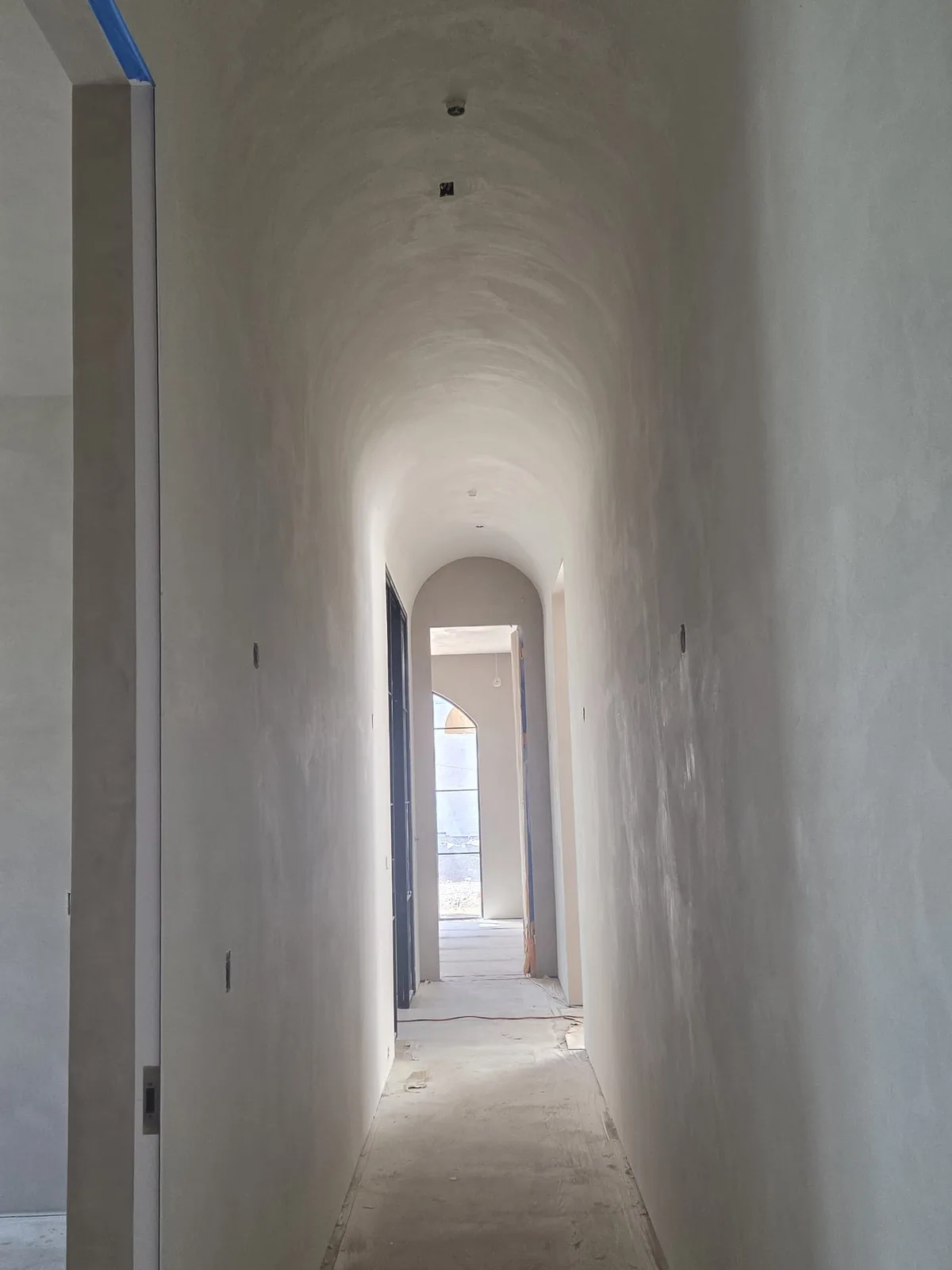
Five finishes. All of them done by hand.
Whether you know exactly which finish you want or you're still working it out with your designer, this is what we build and how we build it.
We prepare every surface the same way no matter which finish it's getting: inspected, repaired, sanded, and primed before anything decorative goes on. What changes from job to job is the finish itself, and how many layers, how much burnishing, or how much hand painting it takes to get there.
Venetian Plaster
Venetian plaster is built up in thin layers and burnished by hand until the wall has a depth that flat paint can't touch. Light moves across it instead of just landing on it, so the same wall looks different at nine in the morning than it does at dusk.
We use it most on entries, fireplace walls, and primary suites, the rooms where a plain coat of paint would sell the space short. It works equally well in a warm, muted palette or a near-white finish that just adds texture without adding color.
Best for: entries, fireplace walls, primary suites, powder rooms
Finish: polished, satin, or matte, built in multiple hand-troweled coats
Limewash
Limewash is a mineral finish that soaks into the wall instead of sitting on top of it. It dries with the soft, cloudy variation of old European plaster, and because it's mineral based, it lets the wall breathe.
That makes it a good fit for older homes, plaster walls, and homes near the coast, where trapped moisture behind a heavier paint film causes problems down the road. No two walls come out identical, and that's the point. It's meant to look handmade.
Best for: older homes, plaster walls, exteriors, coastal properties
Finish: soft, matte, and naturally variegated from wall to wall
Antique Plaster
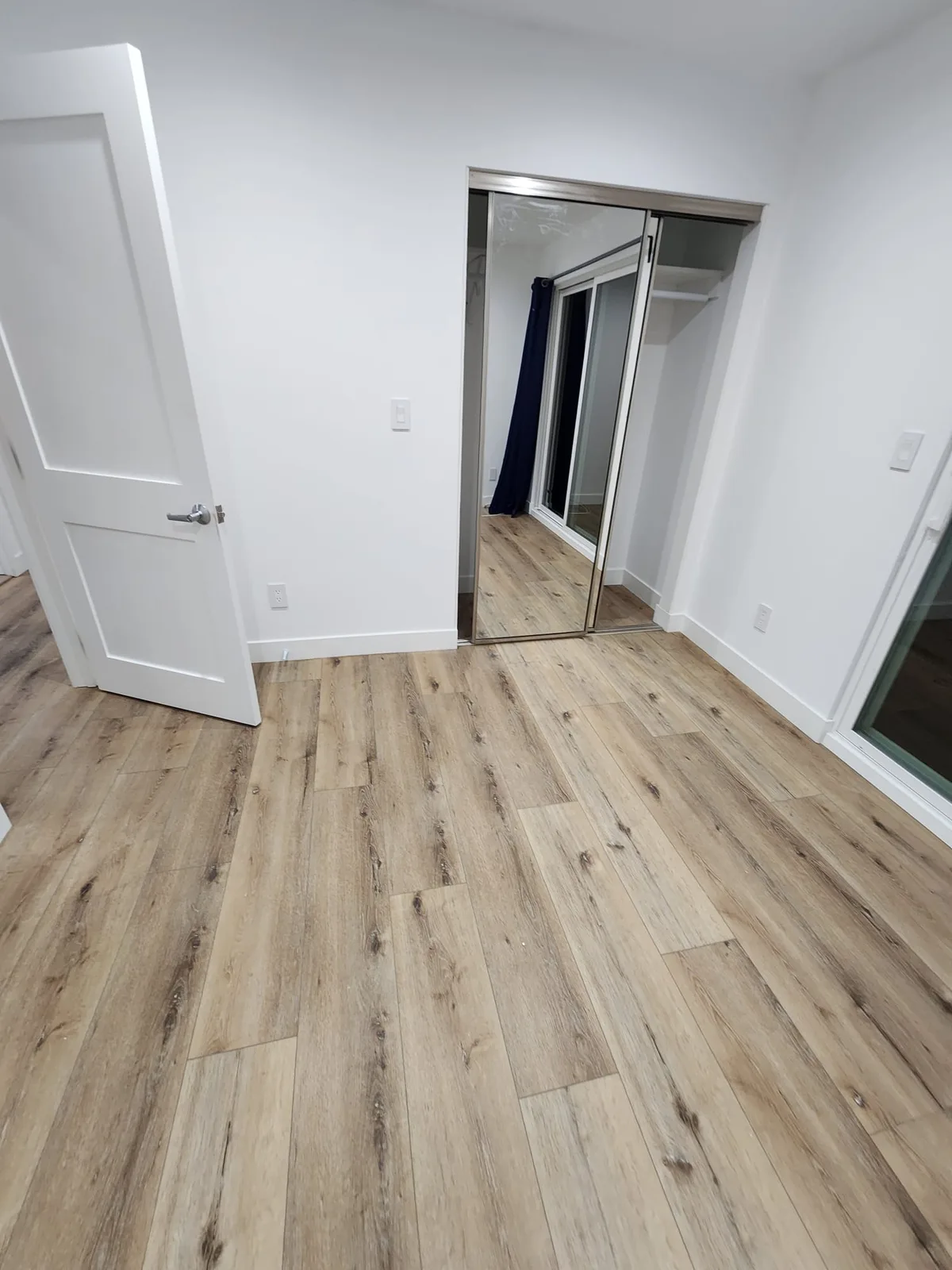
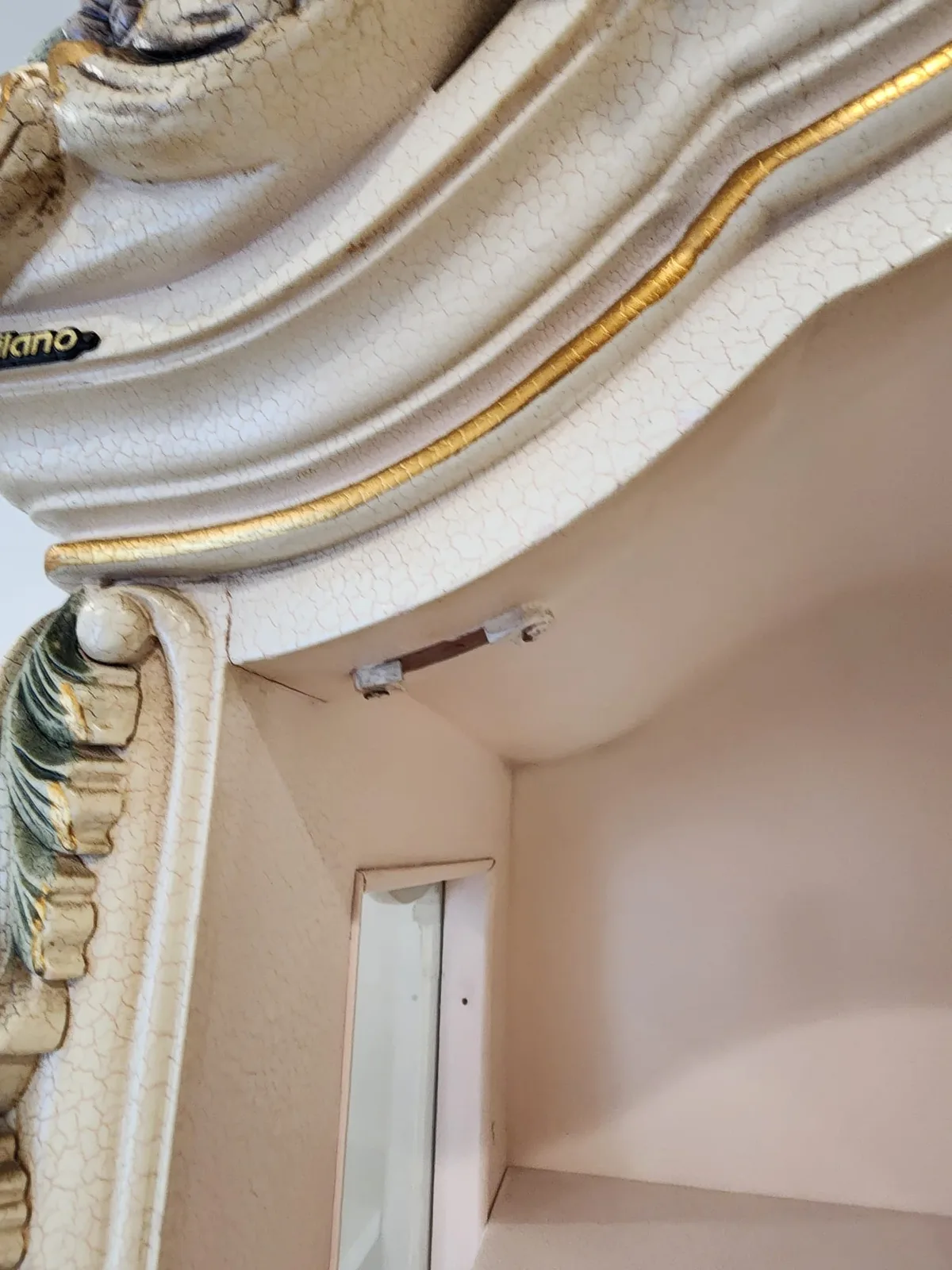
Antique plaster is aged on purpose. We build texture into the surface and work in glazes, cracking, and depth by hand so a brand new wall or mantel reads like it has decades of history behind it.
It suits Mediterranean and Spanish Revival homes especially well, the kind with barrel ceilings, arched doorways, and exposed beams already doing a lot of the work. We also use it to bring reclaimed or new millwork in line with the rest of a period house.
Best for: Mediterranean, Spanish Revival, and period homes
Finish: textured, glazed, and aged to match existing architecture
Faux Finishes
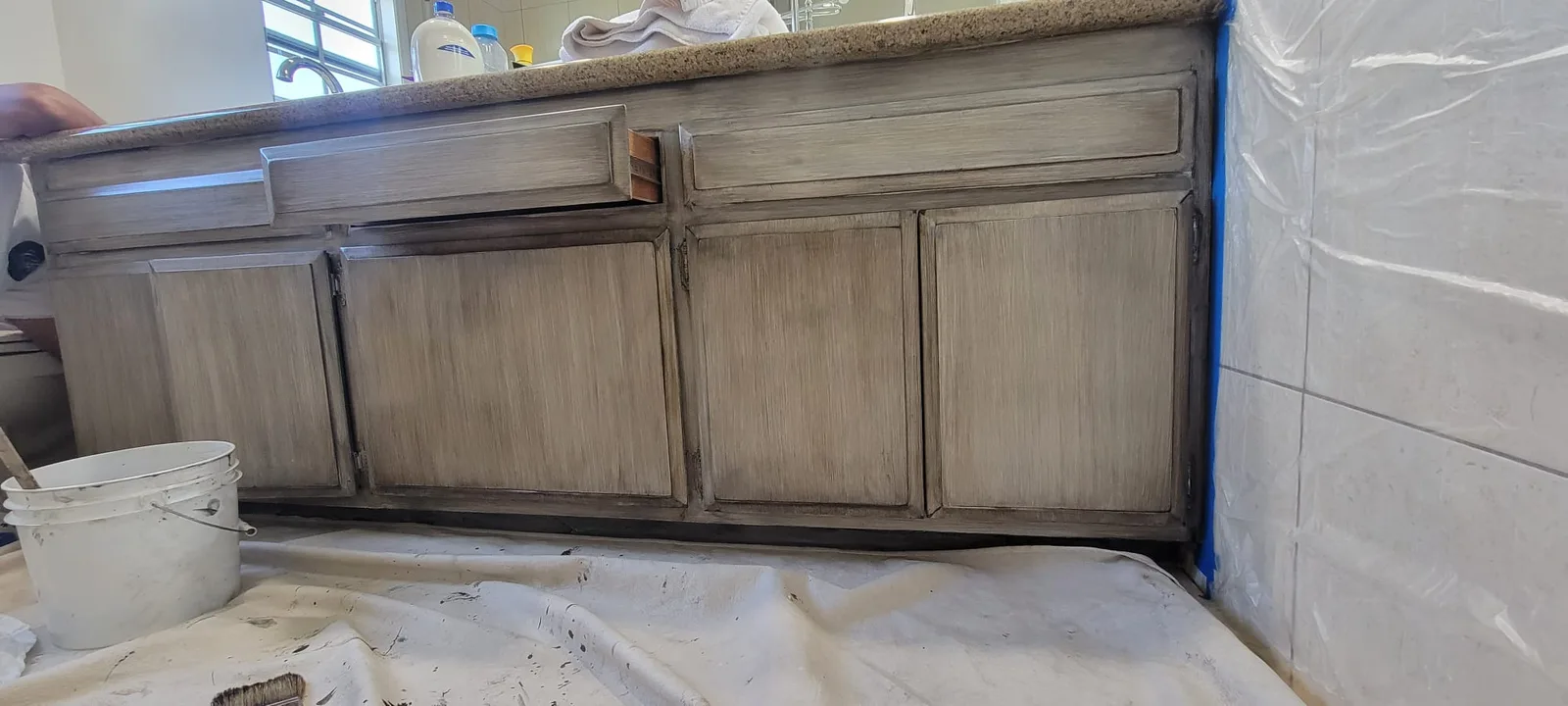
Faux finishes let us match a look you already have in mind: wood grain on a surface that isn't wood, stone on a wall that isn't stone, or a glaze that ages cabinetry ten years in an afternoon.
It's slow, careful work done in layers, usually a base coat, a hand-applied glaze, and a protective top coat. It holds up because we don't rush the layers, and because we test the finish on a sample board before it ever touches your walls or cabinetry.
Best for: cabinetry, millwork, accent walls, furniture
Finish: wood grain, stone, glaze, and aged patina, matched from a sample
Custom Finishes
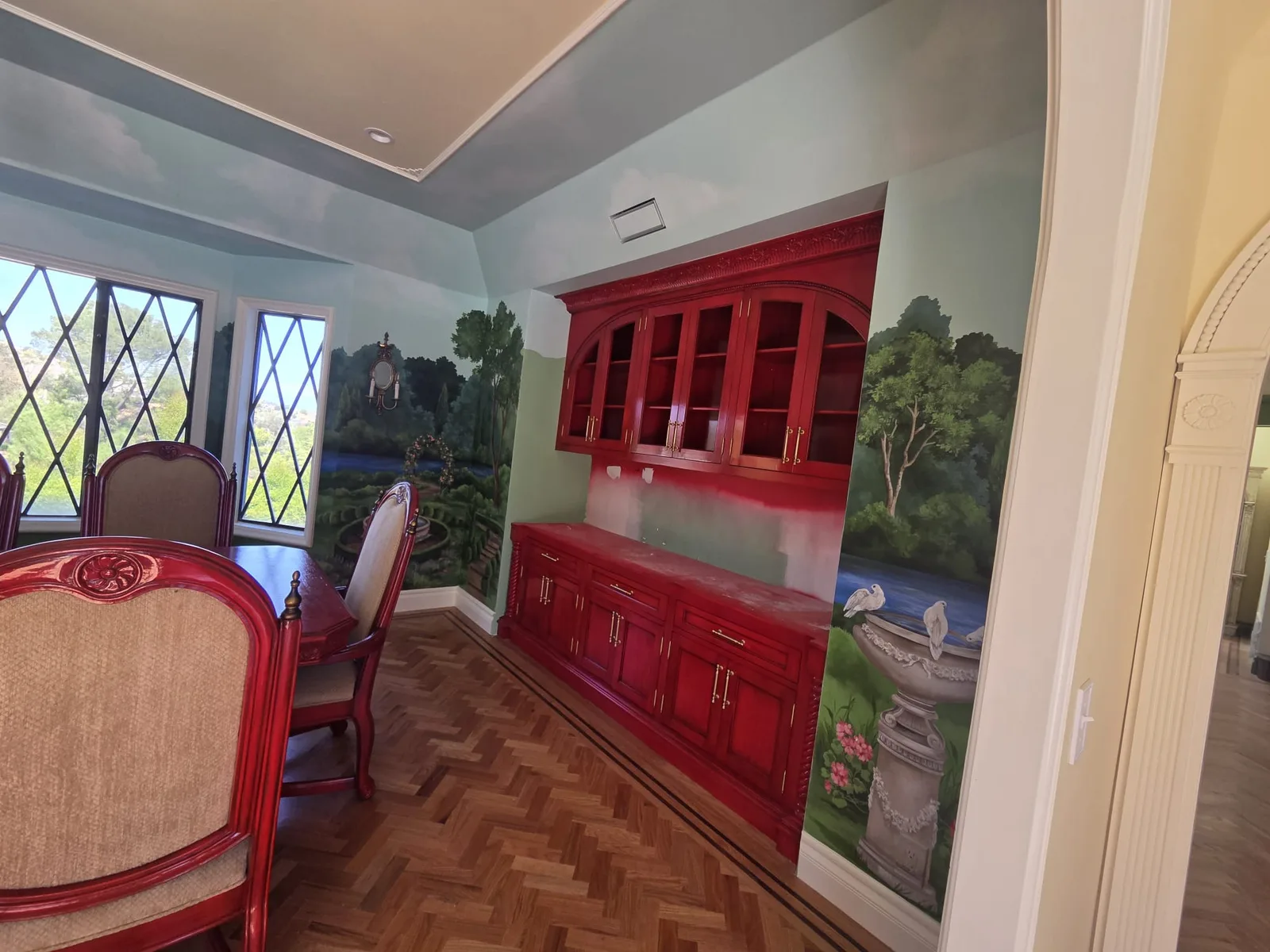
Some projects don't fit a category. We've hand painted garden murals across an entire dining room, lacquered furniture and cabinetry to a mirror shine, and refinished wrought iron railings from bare metal back to a finish that matches the house.
This is the part of the work that starts with a conversation, not a spec sheet. If you can describe it, sketch it, or point to a photo of it, we can usually figure out how to build it and make it hold up over time.
Best for: murals, lacquer finishes, ironwork, one-off design concepts
Finish: built from a reference, a sketch, or a conversation with your designer